


Temperature control is a key factor in the production of organic liquid fertilizer. YUSHUNXIN recommends chelation equipment. The function of the chelation tank is to optimize the activity of microorganisms by regulating the temperature, promoting the decomposition of organic matter and the release of nutrients. Below are details on how to effectively control the temperature in a chelation tank.
Why is it necessary to control temperature in the production of organic liquid fertilizer?
First of all, It is essential to understand the importance of temperature control. During the chelation process, Appropriate temperature can accelerate the reaction speed and improve the activity of microorganisms. These microorganisms, mainly bacterias and mushrooms, are the main drivers of the decomposition of organic matter. Too high a temperature can kill microorganisms, while a temperature that is too low can inhibit its activity. Therefore, It is crucial to maintain a constant and adequate temperature range in the chelation tank.
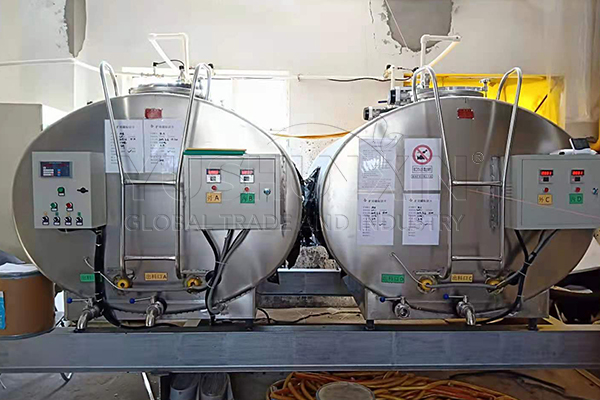
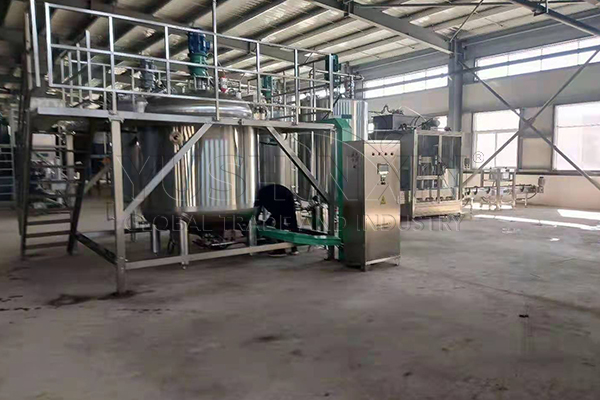
How can you achieve temperature control?
First of all, it is necessary to use a temperature sensor to monitor the temperature inside the chelation tank in real time. The sensor is accurate and can react quickly to ensure that temperature changes are detected quickly. The data can be displayed by the control system and used to automatically adjust other liquid fertilizer equipment, as heaters or cooling systems.
In second place, the chelation tank is equipped with a heating and cooling system. These systems can be adjusted by electronic controllers based on data provided by sensors. For example, An electric heater can automatically turn on when the temperature drops below a set point to provide additional heat. On the contrary, when the temperature is too high, a cooling system can be activated (such as cooling water jacket or air cooling equipment) to reduce the temperature inside the chelation tank. Used to control the temperature in the production of organic liquid fertilizer.
Besides, The stirring device is also an important part of temperature control. Stirring can ensure the uniformity of the material in the tank and avoid uneven temperature distribution.. At the same time, Agitation can also increase oxygen distribution and further promote the activity of microorganisms.
Finally, Regular equipment maintenance ensures that the chelation tank temperature control system is working properly. This includes periodically calibrating temperature sensors, check the performance of heating and cooling equipment and ensure that agitation devices operate effectively.


 WhatsApp:+8615036116306whatsapp
 info@equipofertilizantesoluble.comE-mail
 Get quoteprice
 Back to topBack to top


