


Production of liquid fertilizers, A fundamental aspect of its production is the fermentation process (or called chelation), especially the organic liquid fertilizer manufacturing. The best method is anaerobic fermentation of liquid fertilizer, which can decompose organic waste quickly. Here, with industrial liquid fertilizer reactor YUHSHUNXIN, just take 3 a 5 days. Even for the manufacture of NPK liquid fertilizers, the chelation tank is key to ensuring balanced nutrient distribution.
Why is anaerobic fermentation of liquid fertilizers better than anaerobic?
La anaerobic fermentation, in which microorganisms decompose organic matter in the absence of oxygen, It is considered superior and more efficient than aerobic in the production of certain liquid fertilizers.. This advantage lies mainly in the speed of the process and ease of handling.. In an anaerobic environment, metabolic reactions occur rapidly, allowing greater production of organic compounds such as humic acids, which are valuable in improving soil quality.
Besides, Anaerobic fermentation generates less CO2 emissions compared to aerobic fermentation, which makes it more sustainable and environmentally friendly. The anaerobic process can also be used to decompose organic waste, which helps reduce the amount of waste generated in fertilizer production.
What equipment is best for anaerobic fermentation of liquid fertilizers?
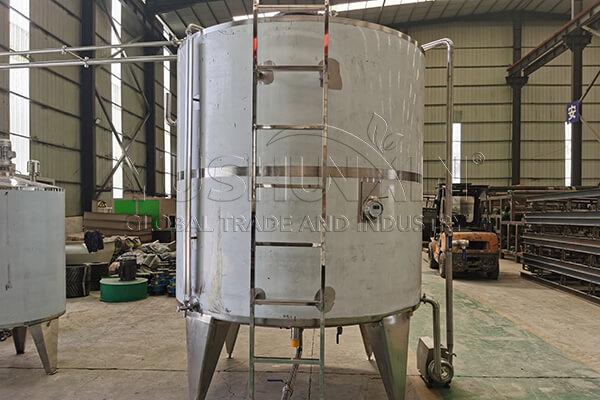
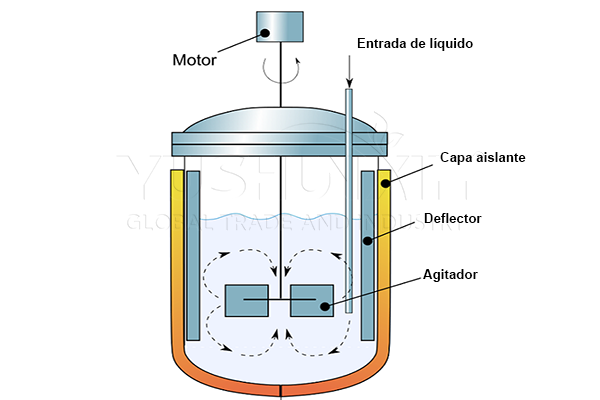
In the production of liquid fertilizers through anaerobic fermentation, one of the key equipment is the anaerobic reactor. These reactors are designed to maintain an oxygen-free environment, which is essential for the activity of anaerobic bacteria. Reactors can be of different types, such as fixed bed reactors, upflow or lake digesters, depending on the scale of production and the specific needs of the process.
El control de la temperatura, pH and retention time is crucial to optimize the production of liquid fertilizers. Proper reactor design can accelerate the decomposition process and ensure the quality of the final product, maximizing fermentation efficiency.
Is a Liquid Chelation Tank Necessary for the Production of NPK Liquid Fertilizers?
liquid chelation tank, which is used to form complexes between nutrients and chelating agents, may be necessary in the NPK liquid fertilizer production. These tanks allow the micronutrients (like iron, zinc and manganese) are more easily assimilated by plants, avoiding the precipitation of these nutrients in the medium.
Although it is not always mandatory, Its use is common to improve the effectiveness of liquid fertilizer, ensuring that nutrients are optimally available to plants. Liquid chelation improves nutrient solubility and stability, which increases the efficiency of the fertilizer and reduces the amount needed to obtain effective results in crops.
What should be paid attention to in anaerobic fermentation of liquid fertilizer production?
In the anaerobic fermentation process in the production of liquid fertilizers, the following points must be taken into account:
- Raw material selection: Be sure to use organic raw materials free of contamination and diseases to ensure the quality of fermentation.
- Control de temperatura: Maintain a suitable temperature (generally between 30 y 40 degrees centigrade) to promote microbial activity and fermentation efficiency.
- Sealed environment: Be sure to seal the fermentation device to prevent oxygen from entering and affecting the anaerobic fermentation process..
- Agitation management: Adequate agitation is required to evenly distribute microorganisms and nutrients and avoid local overheating or nutrient depletion..
- Time control: The fermentation time should be adjusted according to the raw materials and fermentation conditions., generally oscillating between 15 y 30 days.
- Paying attention to these issues, The efficiency and safety of anaerobic fermentation of liquid fertilizers can be effectively improved..
In summary, Anaerobic fermentation is an efficient and rapid process for the production of liquid fertilizers, particularly when used in a suitable reactor. Besides, The use of a liquid chelation tank may be a valuable option to improve the bioavailability of nutrients in NPK fertilizers. These technological advances allow more efficient and sustainable production, benefiting both farmers and the environment.


 WhatsApp:+8615036116306whatsapp
 info@equipofertilizantesoluble.comE-mail
 Get quoteprice
 Back to topBack to top


